

Anyone who has resumed a half-finished Power BI rework after a week knows the problem: what was still open? Which measures were checked? With people, notes help. Our agent system turns that into a principle.
What "state" means
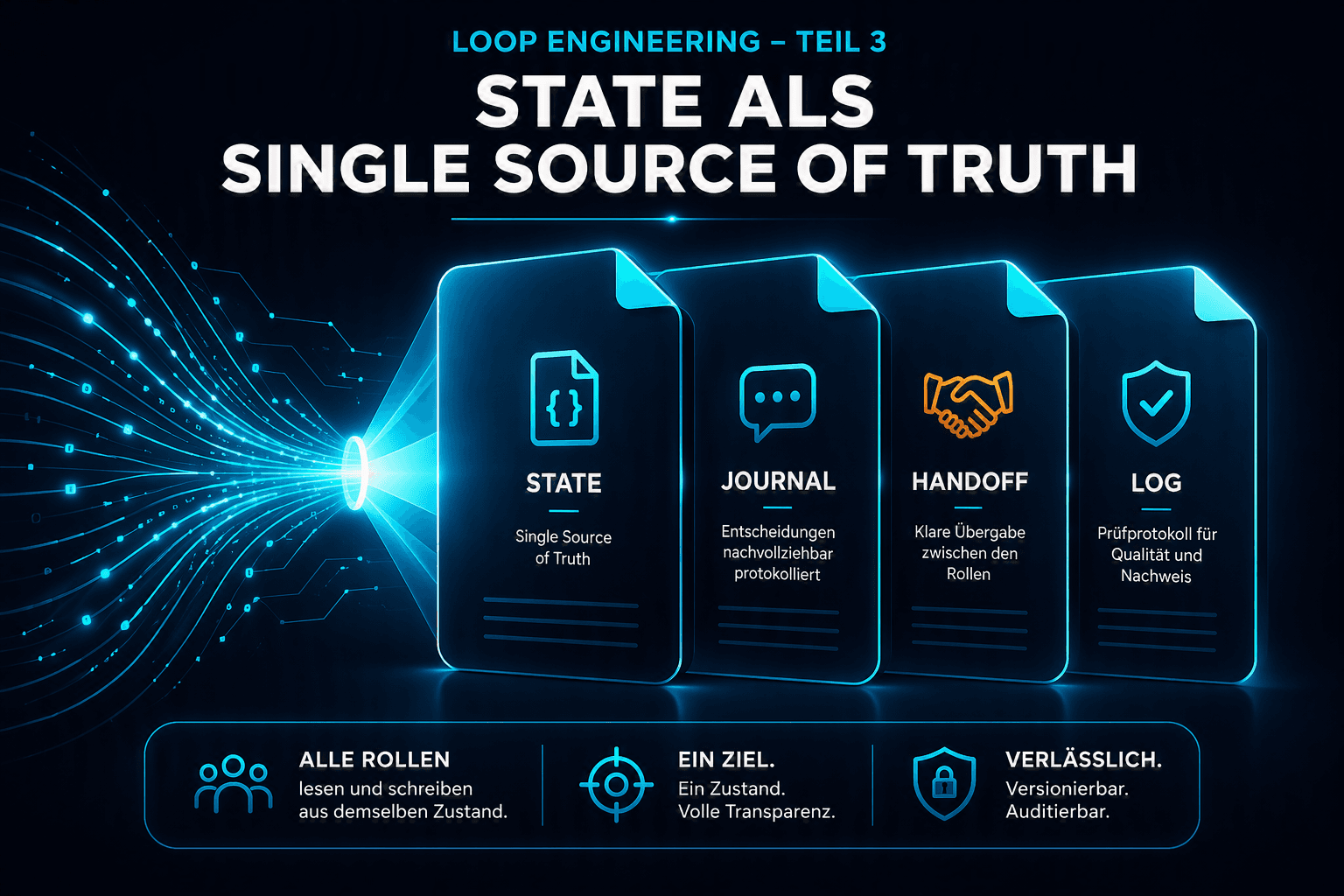
State is the complete answer to "where am I and how did I get here?" — independent of the volatile chat. The principle is called single source of truth: exactly one authoritative place of truth.
Four artifacts per goal
For every goal the orchestrator creates a dedicated persistent state folder — with always the same four artifacts:
- A machine-readable state — the goal, the detected domain, the artifact type, the plan, the acceptance criteria, open questions, iteration counter, cost budget, and the "done" flag.
- A human-readable decision log — one entry per round with "Done / Why / next step / lessons".
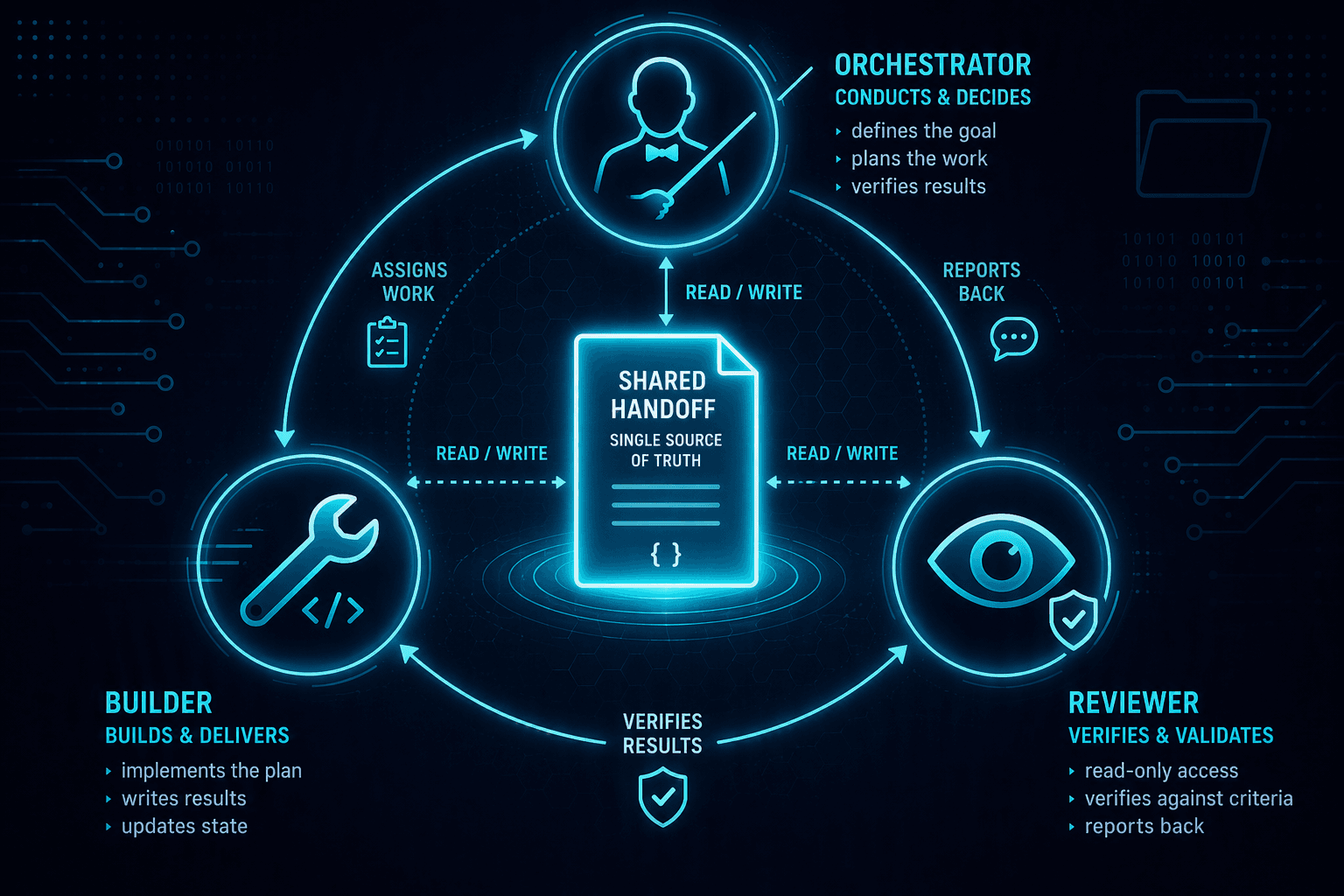
- A standardized handover document through which the orchestrator assigns a task to the Power BI specialist or the data-engineering worker (see Article 5).
- A verification record — every validation run with command and exit code, only appended to, never overwritten.
Three capabilities the chat cannot provide
- Resumability. If a long report build breaks off, the agent continues at exactly the right phase — a state field says where.
- Auditability. Every design decision ("why this chart, why this theme?") is documented in the decision log. Invaluable for reviews and handovers.
- No-progress detection. Via a hash of the core contents, the system detects stagnation: if nothing actually moves across two rounds, it stops — no expensive circling.
For architects
This is an explicit state machine with an event log — except the "processor" is a language model. Exactly this externalization turns an AI agent from an unpredictable assistant into a verifiable system.
What isn't recorded doesn't exist. At least not reliably.
How do your BI automations record their intermediate state? 👇
#SoftwareArchitecture #PowerBI #StateMachine #AIAgents #LoopEngineering #DataEngineering