

For six articles it was about the mechanics of our Power BI / Fabric agent system: the goal-driven loop, externalized state, fixed phases, separated roles with skills, hard gates. Now the question that matters — what does this mean for your role?
The core message up front: do not trust the model, trust the system around the model.
For executives
The value only materializes once you can trust the result without checking every report. A state-driven system with hard gates turns a "nice AI experiment" into a dependable tool for BI delivery: reproducible reports, a complete record of every decision and every check, less manual oversight. And because the language model is interchangeable, you are not locked into a model generation — investment security included.
For architects
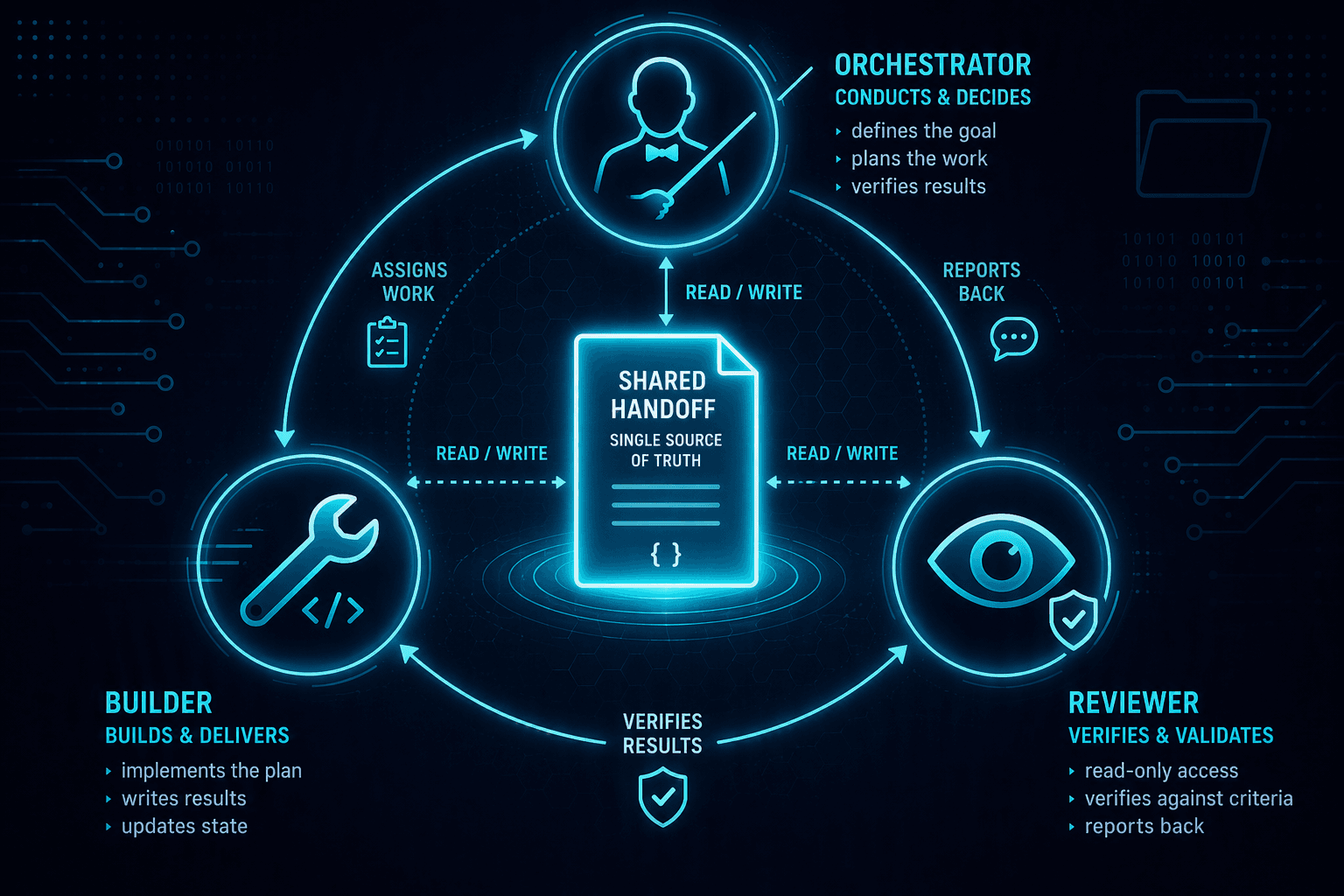
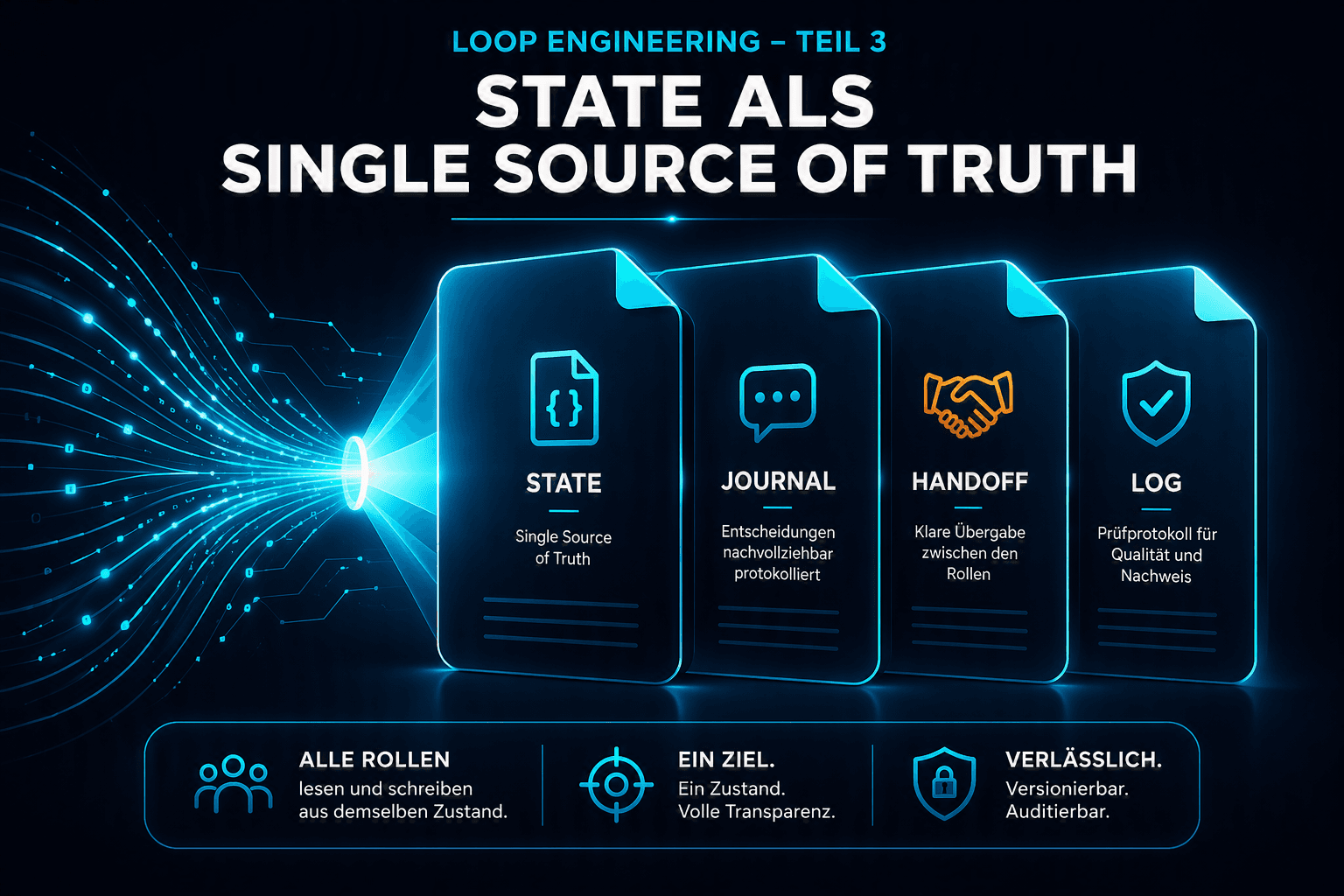
The pattern is transferable: explicit state machine, durable event log, separated roles (orchestrator / Power BI specialist / data-engineering worker / independent reviewer), declarative routing, reusable skills, and fail-closed gates. The engineering effort lies not in the ever-longer prompt, but in the control flow, the boundaries, and the checks.
For developers
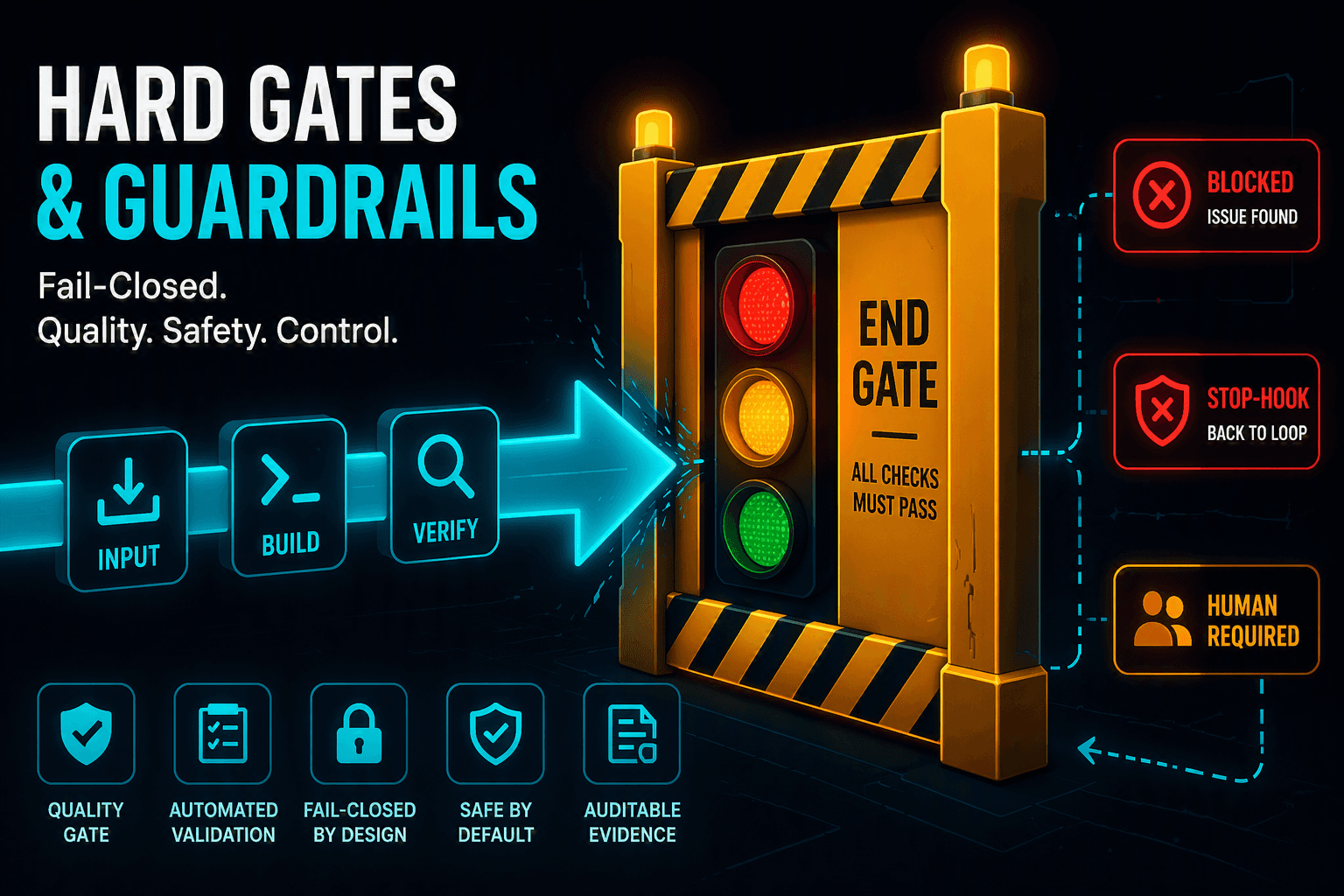
Familiar tooling, newly applied: defined states, executable checks instead of felt completion (strict report validation, secret scan, model sanity check), tightly scoped write permissions, guards against destructive actions, idempotence, and resumability. A Power BI agent thereby becomes testable and debuggable like any other software: when something breaks, the decision log and the verification record tell you precisely where and why.
What this concretely means for Power BI
Reports that reliably open without errors in Power BI Desktop. Data models following best practices (star schema, measures instead of calculated columns). Corporate design and accessibility as verified criteria, not by chance. No accidentally shipped tenant IDs. And an independent visual sign-off before anything reaches the user.
The one lesson
The jump from an impressive demo to reliable production comes not from an even cleverer model, but from discipline, state, and hard gates. That is exactly what loop engineering is — applied to Power BI and Microsoft Fabric.
It is the point at which AI agents stop being a risk and start taking on work you can genuinely trust.
Thanks for reading through the whole series. How do you approach reliability in AI-assisted BI development? 👇
#PowerBI #Microsoft