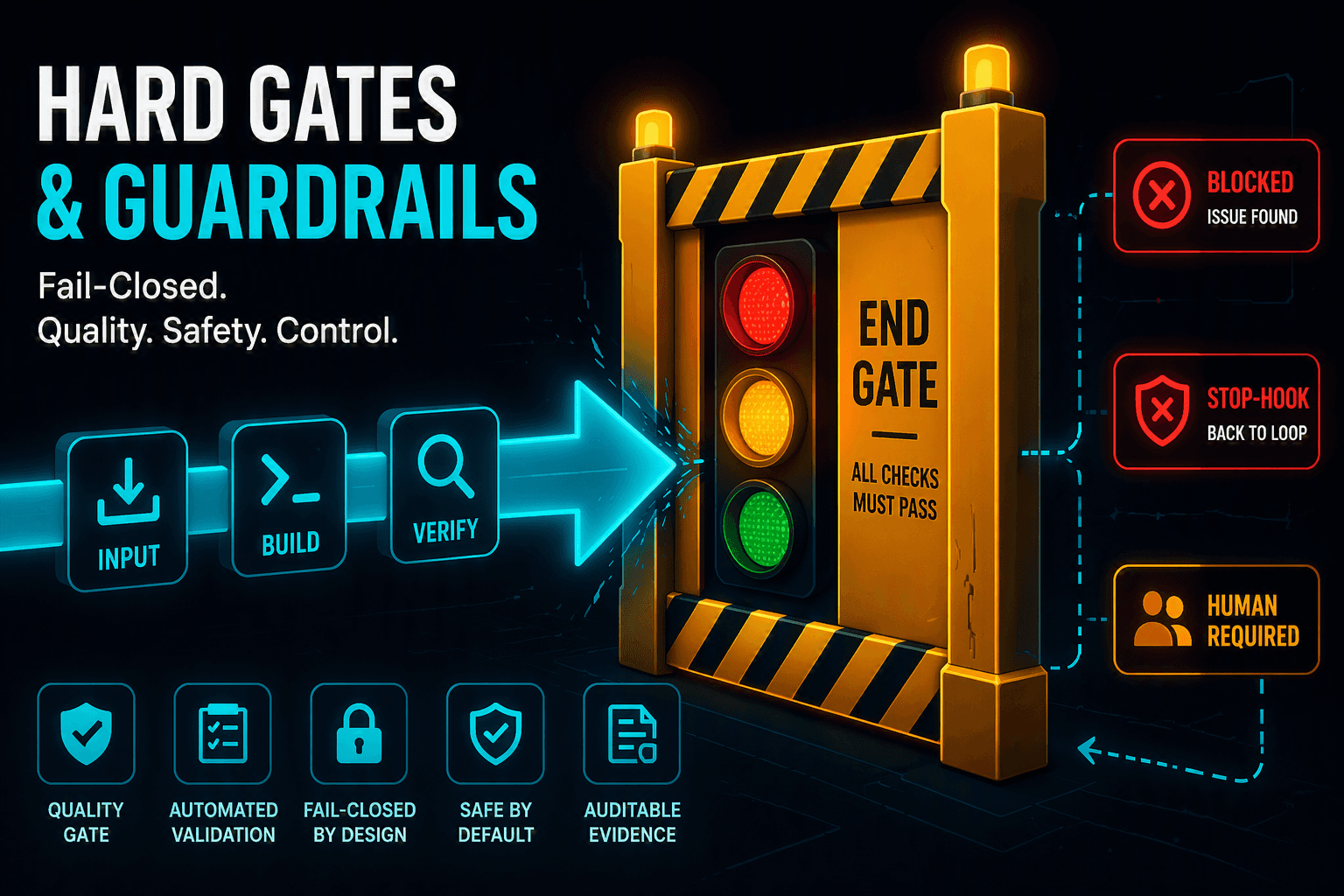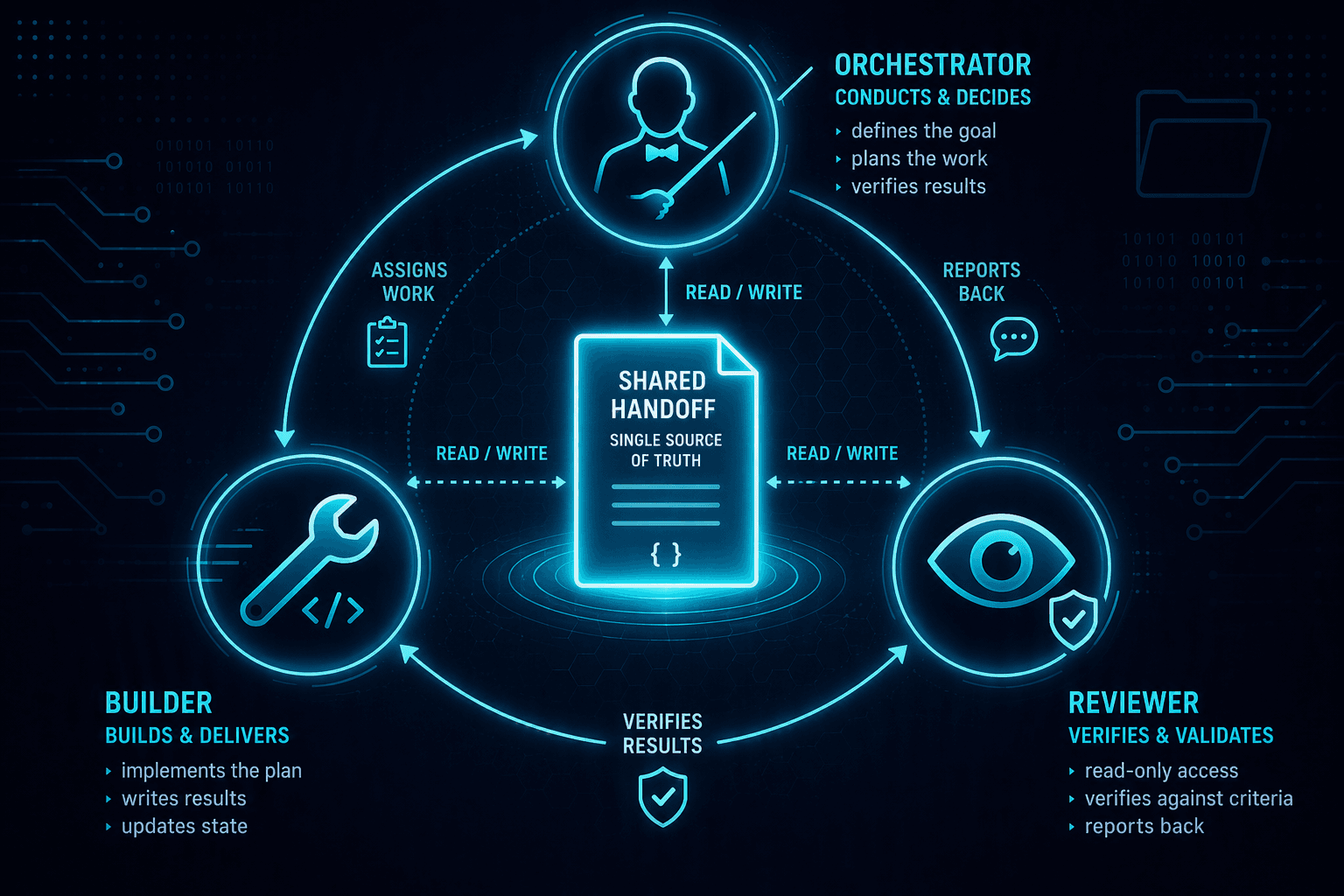


In my current article series, I explore how Lukas Ehl and I are developing and driving the adoption of Loop Engineering, AI, and the complete automation of Power BI report development at Deutsche Bahn and DB Systel.
While many discussions around AI-generated software development focus primarily on the technical implementation, our experiments revealed a different challenge: translating business requirements into a format that AI can reliably understand and execute.
The Real Challenge
In traditional BI projects, requirements are gathered and refined together with business departments and stakeholders.
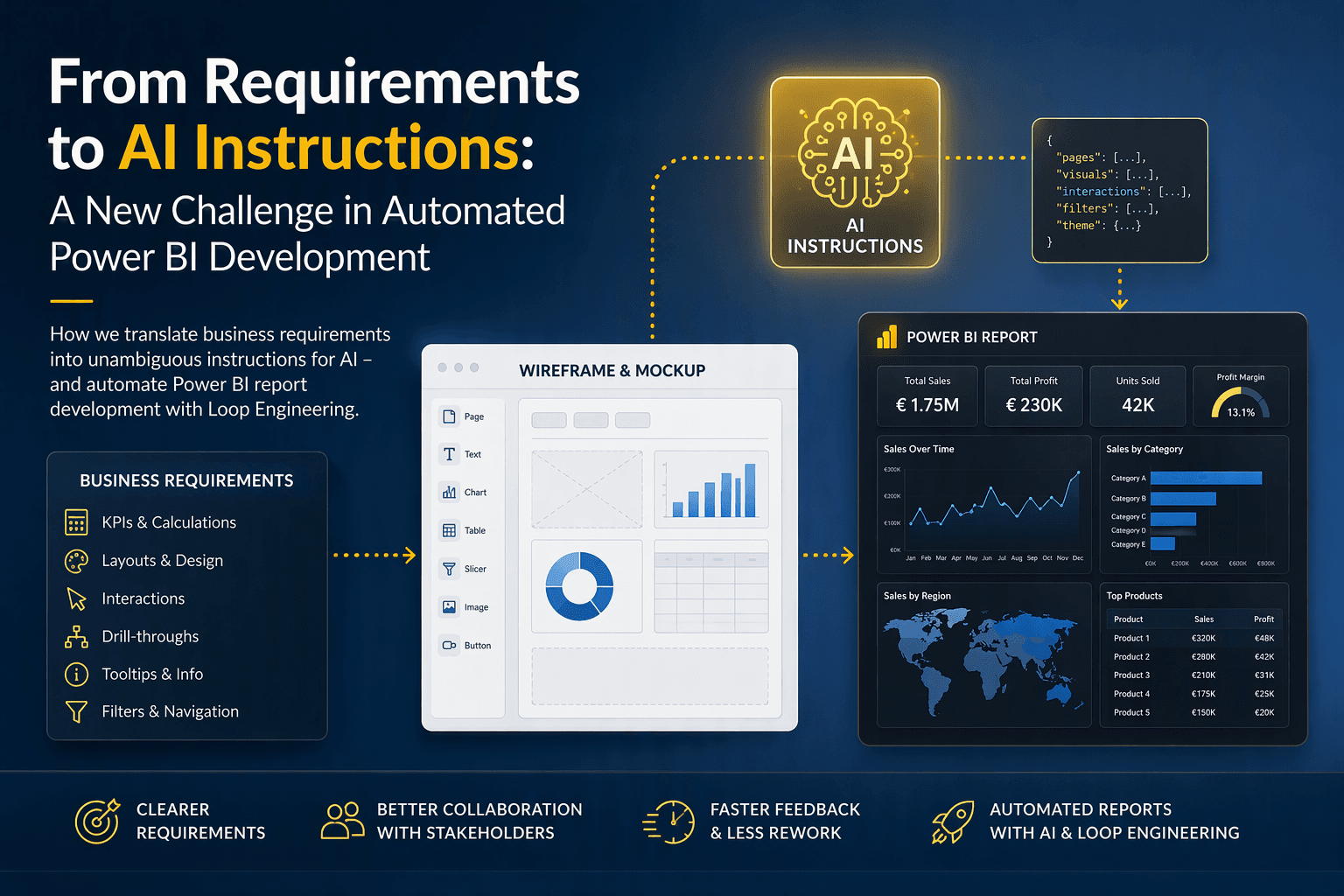
These requirements are not limited to KPIs and calculation logic. They also include many additional aspects, such as:
- Report page layouts
- Corporate design and color schemes
- Visual interactions
- Drill-through navigation
- Filter concepts
- Tooltips
- User guidance and storytelling throughout the report
An experienced developer can interpret ambiguous requirements, ask follow-up questions, and clarify uncertainties.
An AI cannot.
It requires instructions that are explicit, consistent, and structured.
The Limitations of Natural Language
The most obvious approach is to describe requirements using natural language.
In practice, however, this quickly reaches its limits.
The more complex a report becomes, the longer and more detailed the descriptions need to be. At the same time, natural language introduces significant room for interpretation. Two people can read the same requirement and develop different understandings of what is expected.
The same applies to AI systems.
As a result, the generated report may differ from the original intent and expectations.
Our Approach: A Mockup and Wireframe Tool
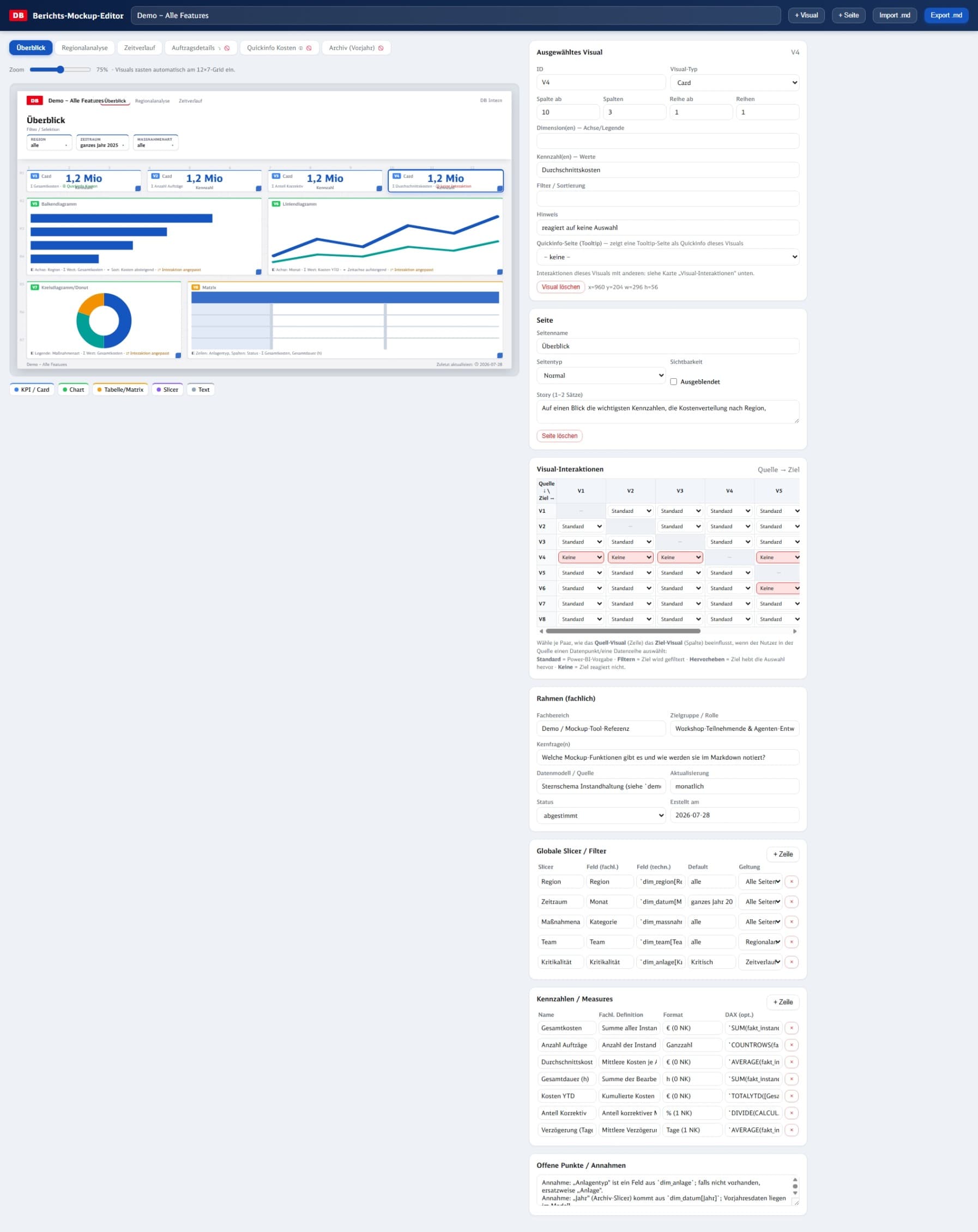
To address this challenge, we developed our own mockup and wireframe tool.
The core idea is to move beyond purely textual requirements and capture report designs in a structured and visually precise way.
The tool allows business users and stakeholders to collaboratively design report pages. Visuals can be positioned, layouts adjusted, and design standards applied before any actual report is generated.
This creates a specification that is significantly easier for both humans and AI systems to understand and interpret correctly.
Of course, no wireframe tool can fully represent every Power BI feature. For specialized requirements and unique scenarios, we therefore provide additional free-text fields where further instructions and context can be supplied to the AI.
Additional Benefits
The advantages extend far beyond improved communication with AI systems.
Business users can provide feedback at a much earlier stage and gain a realistic impression of what the final report will look like. This reduces misunderstandings and enables changes to be implemented much more efficiently.
At the same time, the wireframe can be aligned directly with existing reporting standards and corporate templates. The same template can then be used by the AI as the foundation for automated report generation.
Are We Seeing the Emergence of a New Discipline?
The most interesting insight for me is something else entirely.
If AI increasingly takes over the creation of reports, applications, and business solutions, traditional requirements engineering alone may no longer be sufficient.
We must learn how to express requirements so that they are not only understandable to humans but also structured, precise, and machine-readable for AI systems.
Perhaps we are witnessing the emergence of a new role—or even a new discipline:
AI Requirements Engineering
Or, put differently:
The ability to instruct AI effectively may become just as important as the ability to implement the solution itself.
🚀